Historical Photography

Photography has a rich and complicated history — full of iconic images, pioneering figures, forgotten archives, and equipment that shaped how we see the world. This section digs into that history, from the earliest daguerreotypes to the defining photojournalism of the 20th century, exploring how the medium evolved and what we can still learn from it today.

What Is Truth in a Post-Photography World?

In March 2026, the National Republican Senatorial Committee released an online ad featuring a minute-long video of Democratic Senate candidate James Talarico speaking into the camera, reading statements the real Talarico had not spoken on camera. The Talarico in the video was generated entirely by artificial intelligence, voicing content drawn from the candidate's old social media posts. The words "AI Generated" appeared in small text in the corner of the frame at the start, then faded into even smaller text that remained on screen while the fake Talarico continued to speak. 

Why 28mm, 35mm, and 50mm Shaped the Way We Photograph Cities

In photography, style is often discussed in terms of subject matter, color, or composition. Certainly important aspects to consider, but much less frequently do we talk about something equally decisive: focal length. Yet if you look closely at the history of urban landscape photography, focal length reveals itself as a kind of quiet grammar.

The Value of Leica's Classic Lens Line

New iterations of our favorite tech appear regularly, and though the new version is often indistinguishable from the previous one, the manufacturer tells us we can't live without it. The previous version of the product is quickly forgotten, as it is now considered obsolete, with nothing to offer over the new model. Nikon, Canon, Sony, and Fuji have taught us not to look to the past when we select a camera or lens. Leica is the only company that understands the value of choosing tech that isn't state-of-the-art.

Old School vs. New School: How Generations Actually Differ as Photographers

Shooting film in an era of instant digital feedback isn't a step backward; it's a deliberate choice that exposes real differences in how generations approach the craft. Understanding those differences can sharpen how you think about your own photography, regardless of which tools you use.

The $1,500 Camera Nobody Knew Existed

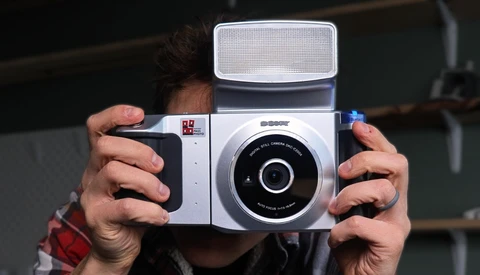
The Sony C200X is a 4-megapixel digital camera from 2004 that almost nobody outside of a post office or print shop has ever touched. It was built for one job: taking passport photos, and it did that job well enough that some of these are still in active use today.

The Shot Seen Around the World: How a Photo Can Reveal and Omit

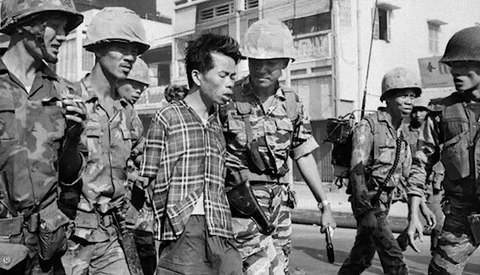
On February 1, 1968, Associated Press photographer Eddie Adams was on the streets of Saigon in South Vietnam with his camera to capture the moments during the Tet Offensive during the Vietnam War. It was here when he captured a moment that would end up becoming one of the most influential photos in modern history. 

The Darkroom of Death: 10 Forgotten Hazards of Early Photography

The photographs that survive from the nineteenth century carry a strange weight. Daguerreotypes of solemn faces, wet plate portraits of Civil War soldiers, albumen prints of Victorian families posed in their Sunday best. What we rarely consider when looking at these images is what their creation cost the people who made them. The early history of photography reads less like the story of an art form and more like a catalog of occupational disasters. 

Catherine Leroy: A Combat Photographer’s Journey

Catherine Leroy was a highly influential photojournalist in the twentieth century whose work fundamentally helped shape visual understandings of the Vietnam War. During the war, events were reported and viewed as strategic or abstract; however, her work presented the war as an immediate human experience characterized by the subject’s vulnerability, exhaustion, and the moral complexity of the conflict.

The Rise and Fall of Vimeo

Vimeo used to be the place where your best work looked better, loaded cleaner, and felt like it belonged in a serious portfolio. If you shoot photos and video, the platform you choose can quietly shape how clients judge your work before they ever reply.

10 More Crazy Photography Facts You (Probably) Didn't Know

Think you know everything about photography? From the hidden math behind your files to bizarre legal battles over monkey selfies, these facts reveal the fascinating technical quirks and strange history that most photographers never learn.

Why Your Vintage Lens Might Be Radioactive

"3.6 roentgen. Not great, not terrible." If you've ever browsed vintage lens forums or explored the world of classic camera gear, you've probably encountered a strange warning: "This lens is radioactive." It sounds like the setup to a bad science fiction movie, but it's absolutely true. Some of the most beloved lenses from the 1950s, 60s, and 70s contain glass elements laced with thorium, a mildly radioactive element. These lenses can make a Geiger counter click like a tap dancer on a hardwood floor.

10 Crazy Photography Facts You Didn't Know

Photography is full of surprising history, weird technical quirks, and fascinating stories that even experienced photographers might not know. From the mathematical precision behind f-stops to cameras abandoned on the moon, these facts reveal just how wild the world of photography really is.

What Really Killed Minolta? A Post-Mortem

Before the "Big Two" dominated professional photography, there was a "Big Five." Canon, Nikon, Pentax, Olympus, and Minolta all competed for market share in the film era, and among them, Minolta wasn't just a player. They were arguably the most innovative of the entire pack.
5 More Utterly Bizarre Lenses That Actually Made It to Market (And Why We Love Them)

If you thought the first batch of weird lenses was strange, buckle up. The history of photography is deeper and weirder than anyone gives it credit for, and manufacturers have tried some truly bonkers ideas in pursuit of solving problems both real and imagined. Some of these experiments were brilliant engineering achievements that the market simply wasn't ready for. Others were solutions so specific they could only ever appeal to a handful of users. And one of them literally reinvented what a camera lens even is.

5 Utterly Bizarre Lenses That Actually Made It to Market (And Why We Love Them)

In today's lens market, we're spoiled with clinical perfection. Every new release promises sharper corners, less chromatic aberration, and faster autofocus. But rewind a few decades, and the photography industry was a wild west of mechanical experimentation, questionable engineering decisions, and ideas that made perfect sense to exactly nobody. Some of these experiments became beloved cult classics. Others became cautionary tales whispered in engineering departments. All of them are gloriously, magnificently weird.

The 13 Best DSLRs Ever Made: A Look Back at the Cameras That Defined an Era

The DSLR era may be winding down, but its legacy is undeniable. These cameras revolutionized photography, democratized professional tools, and created entirely new industries. From wedding photography to YouTube content creation, the DSLR shaped modern visual culture in ways that are still being felt today.

How Sony Ate Canon and Nikon's Lunch: The Five-Year Head Start That Changed Photography Forever

In the autumn of 2013, if you walked into any professional photography studio, sporting event, or wedding venue, you'd see a sea of black cameras with red rings and gold badges. Canon's 5D Mark III and Nikon's D800 weren't just cameras, they were symbols of serious photography. Their size, their weight, their distinctive mirror slap, these were the sounds and feels of professional work. The camera industry had a natural order, and everyone knew their place in it. Then Sony dropped a bomb.

The Rise and Fall of the Point-and-Shoot Camera

There's a 10-year-old Canon PowerShot in your parents' junk drawer. It was once a $300 piece of high technology, a marvel of miniaturized optics and digital sensors that could fit in a shirt pocket. Today, the phone in your hand takes better photos in worse lighting without you thinking about it. This is the story of how the smartphone killed the most popular camera on Earth.

5 Legendary Lenses That Changed Photography Forever

Photography has been revolutionized not just by cameras, but by the glass in front of them. While cameras capture the image, it's the lens that creates it: shaping light, defining character, and determining what's even possible to photograph. These five lenses didn't just improve image quality; they fundamentally transformed what photographers could do, how they could do it, and who could afford to do it.

The Patent War That Changed Photography Forever

In 1976, Kodak made what seemed like a smart business decision. Polaroid had dominated instant photography for decades, and consumers clearly wanted the technology. Kodak had the manufacturing scale, the distribution network, and the engineering talent to compete. They released their EK series instant cameras and started selling film. Within months, Polaroid sued them for patent infringement. What followed was one of the most expensive and consequential legal battles in photographic history.

3 Camera Technologies That Died Before They Should Have

Not every brilliant camera technology dies because it's flawed. Sometimes innovations vanish because the market couldn't support their development, manufacturers chose cheaper alternatives, or the industry simply moved on before the technology reached its full potential. Here are three examples of camera technologies that deserved better fates than they received.

The Camera Feature We Never Talk About

The viewfinder isn't just how you see before shooting. It's how you think. Every viewing technology, from ground glass to electronic viewfinders, created a different kind of photographer with a different way of seeing. Some compositions only exist because of how the photographer had to look at the world through their particular viewfinder. Maier's intimate street portraits wouldn't exist without waist-level viewing. Adams's formal landscapes required the contemplation of ground glass. The viewfinder shaped the photograph before the shutter ever opened.

The Most Important Camera of Every Generation

Every generation has its lens. Picture a child in 1905 clutching a Kodak Brownie, the first camera their family could afford, suddenly able to freeze a moment that would have otherwise vanished into the fog of memory. The family gathering instantly captured on Polaroid 1973. The night out captured on iPhone and uploaded to Facebook in 2010. These were the cameras of your time. 

The Death and Rebirth of Medium Format

There's a Hasselblad 500C/M sitting in a pawn shop somewhere, priced at a few hundred dollars, gathering dust between the guitars and the jewelry cases. Thirty years ago, that camera was a professional's most prized tool—the key to a serious career. By today's standards, it would have cost several thousand dollars when new. Ten years ago, it was an expensive paperweight. Today, it's becoming desirable again, but for entirely different reasons. Medium format photography died and came back to life, and the story of how that happened reveals something essential about what we value in an image and why craft sometimes matters more than convenience.

5 More Cameras That Were Ahead of Their Time

In the first article, we explored five cameras that had the right vision but arrived at the wrong time, from Sony's Mavica prototype to the Contax N Digital. These machines predicted the future of photography but couldn't convince the market they were right.

5 (In)famous Camera Recalls That Changed Industry Standards Forever

No photographer wants to hear that their expensive camera has a fundamental flaw. But some of the most catastrophic product failures in camera history, whether formal recalls or de facto recalls that forced official corrections, led to industry-wide improvements that benefit every photographer today. These weren't just embarrassing product failures. They were watershed moments that forced manufacturers to completely rethink quality control, accelerate innovation, and take customer complaints seriously rather than dismissing them as user error.

6 Brilliant Camera Features That Digital Photography Forgot

Every time I load a memory card into my camera, I think about the satisfying mechanical click of loading a fresh roll of film. Modern digital cameras are technological marvels, packed with computational photography, eye-tracking autofocus, and in-body stabilization that would seem like science fiction to photographers of the 1990s. But in our rush toward the future, we've left behind some genuinely clever innovations that solved real problems in elegant ways. These weren't gimmicks or marketing features. They were thoughtful solutions born from the unique challenges of film photography, and some of them reveal just how much we've gained and lost in the digital revolution.

5 Cameras That Were Ahead of Their Time

The history of photography is littered with brilliant ideas that arrived too early. These were cameras that promised to revolutionize the industry but were met with skepticism, confusion, or outright rejection. These weren't failures of engineering. They were failures of timing.

The 5 Best Camera Designs of All Time

Ranking the greatest camera designs in history isn't just about technical specifications or optical performance. It's about identifying the pivotal moments when engineering brilliance, innovative thinking, and perfect timing converged to fundamentally change how we capture and think about photography. Here are five of the most remarkable camera designs in history.

What Happens When You Try to Shoot Film That’s 80 Years Old

Expired film doesn’t just shift colors or create funky tones. Once it’s old enough, it can completely fail, leaving you with nothing but blank frames. That risk is especially real with rolls from the 1940s and 50s, where the materials themselves may have already broken down beyond use. Experimenting with this kind of film can be fascinating, though.

5 Photography Brands That Died Because of One Stupid Decision

The photography industry is littered with the corpses of once-mighty brands that dominated their markets for decades before making single, catastrophic decisions that destroyed everything they had built. The worst part isn't that these companies failed. It's that in most cases, they had the technology, resources, and market position to dominate the future they instead chose to ignore.

The Strange Camera Format You've Never Heard Of

There was a time when professionals swore by a format that gave them speed, reach, and reliability in ways nothing else could. A decade later, it’s little more than a ghost in photography’s memory.

5 (In)Famous Camera Flops

The camera industry has never been afraid to experiment. Over the years, manufacturers have pushed boundaries with bold ideas, ambitious technology, and sometimes outright gambles. Innovation often comes with risk, and not every product makes it across the finish line successfully.

5 Photography Gimmicks That Went Nowhere

Every few years, camera companies roll out something meant to grab attention. Sometimes, those ideas turn into revolutions: autofocus, in-body stabilization, and mirrorless mounts all began as risks that paid off. But for every real innovation, there’s a graveyard of gimmicks — features and products that sounded futuristic, won headlines, and then died in obscurity. Here are five of the quirkiest gimmicks that promised to change photography but went nowhere.

The Greatest DSLR Cameras Ever Made Are Dead

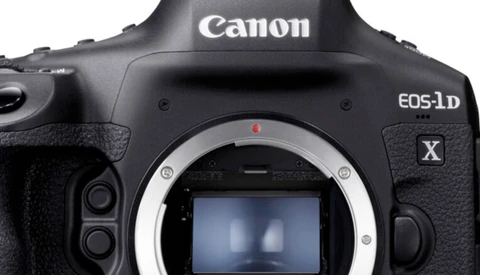
The news landed with the weight of a supertelephoto hitting the studio floor: Canon has discontinued the Canon EOS-1D X Mark III. Just like that, after 35 years of continuous evolution, the flagship DSLR line that defined professional photography for generations has reached its terminus. The last units are shipping from warehouses, repair parts are being stockpiled, and Canon's focus has irrevocably shifted to the mirrorless future.

Three Legendary Stories From Photography's History

Photography’s great revolutionaries didn’t just take pictures. They rewired how civilization sees truth, tragedy, and beauty. Capa risked death, Weegee stalked chaos, and Adams turned catastrophe into perfection, proving that the lens is both weapon and altar.

Don McCullin: Palmyra and What War Destroys

Few photographers have stared into the heart of conflict like Sir Don McCullin. For more than two decades, his black-and-white images defined what it meant to document war. Stark, empathetic portraits of soldiers, civilians, and refugees caught in the chaos of Vietnam, Cyprus, Biafra, and Northern Ireland with his unglamorous photographs. They were raw, human, and often unbearable to look at because they demanded that viewers confront the cost of violence.

The Film Camera That Refuses to Fade

The Nikon FE2 isn’t just another film camera sitting on a shelf. It’s one of those rare tools that carries history in its mechanics, a companion that shapes how you see the world through a viewfinder. Film cameras like this remind you that the way you shoot is often as important as the images you make.

10 Camera Lenses So Ridiculously Extreme They Shouldn't Exist

When most photographers talk about extreme lenses, they're thinking about a fast 85mm f/1.4 or maybe an extra-wide 11mm rectilinear lens. But there's a whole other universe of optical madness where lenses weigh hundreds of pounds, cost more than houses, and push the boundaries of physics so hard they make normal photography look quaint.

Why Waiting a Week for Photos Made Them More Precious

The most valuable photographs you've ever taken weren't the ones you saw immediately on your camera's LCD screen. They were the ones you had to wait for—sometimes a week, sometimes longer—wondering if that perfect moment you thought you captured actually materialized on film. This isn't nostalgia talking; it's psychology, and understanding it reveals something profound about how we value images in an age where we take more photos in a day than our grandparents took in a year.

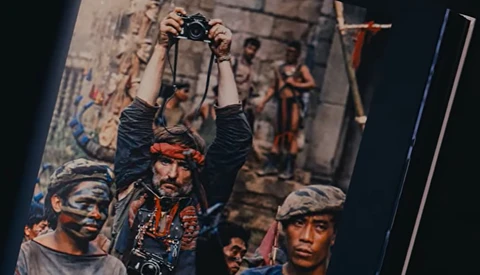
Chas Gerretsen: War Photographer Goes to Hollywood

Renowned Dutch photojournalist Chas Gerretsen is best known for his raw and emotional war photography captured during the Vietnam War and the hostile and violent political turmoil in Chile. However, his career took an interesting turn when he found himself exhausted from covering global conflicts. This turn took him to Hollywood, where he would use his skills sharpened on the battlefield and bring them to the movie set of Francis Ford Coppola's 1979 film, Apocalypse Now.