A midrange body that suddenly shoots like a flagship changes what you attempt in the field, especially when the moment is gone before your brain finishes saying “now.” If you shoot action, wildlife, or kids that never hold still, the difference between “almost” and “got it” often comes down to small features.
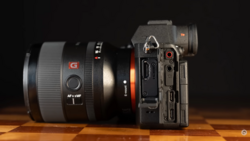
Coming to you from Stefan Malloch, this clear-eyed video puts the new Sony a7 V beside the Sony a7 IV and sticks to what matters when you mostly care about stills. Malloch’s first point is a reality check: don’t buy this expecting a night-and-day jump in pure image quality. Both land around 33 megapixels, so side-by-side photos won’t suddenly look like a different class of camera. The real story is speed, because the a7 V’s partially stacked sensor reads out much faster. That speed shows up as more confident autofocus, and it changes how hard you can push the camera when things move unpredictably.
The autofocus and burst discussion is the part to pay attention to if you’ve ever come home with a sequence where the focus latched onto the branch instead of the bird. Malloch calls out the a7 IV’s 10 fps as “fine,” then contrasts it with blackout-free 30 fps on the a7 V’s electronic shutter, which opens up a different style of shooting. He’s careful about expectations, too, and he draws a line between this camera and true top-tier bodies like the Sony a1 II. You get a big improvement, not magic. If you shoot sports, wildlife, or anything moving straight at the camera, you’ll want to hear how he describes the tracking behavior across real sequences instead of a single hero frame.
Pre-capture is the feature that will either change your keeper rate or quietly sit unused if you never set it up. Malloch explains it in plain terms: half-press to let the camera stay “ready,” then when you fully press, it can save frames from up to about a second before the press. He shares an early win where pre-capture helped him catch an orca breach when the subject was distant and easy to miss. Then he moves into Lightroom to show what this looks like in the messy real world, including low light, high ISO files, and settings mistakes you’ve probably made yourself. There are misses in the examples, and that’s useful, because it shows where technique and shutter speed still matter more than camera specs, like trying to freeze a fast bird at 1/1,000 s in winter light.
You also get a rundown of the physical changes that make the camera feel more “finished” in daily use, including a larger grip, lots of customizable controls, and a screen design that’s aimed at people who shoot stills as much as video. Malloch touches on stabilization improvements when paired with Sony lenses and the camera’s stabilization modes. If you’ve been debating whether to upgrade, the video’s value is seeing how these features behave under pressure rather than reading another spec sheet. Check out the video above for the full rundown from Malloch.
No comments yet