Photography Gear

Gear isn't everything — but it's not nothing either. This section covers the cameras, lenses, accessories, and equipment that photographers actually use, with an eye toward helping you make smart decisions rather than just chasing the latest release. Expect news, analysis, hands-on impressions, and the occasional reality check on whether that upgrade is actually worth it.

Nikon ZR Tested on a Real Road Trip: Is It Worth Carrying All Day?

Picking the right cinema camera for run-and-gun work is rarely straightforward, and the Nikon ZR raises real questions about whether its feature set justifies its size and complexity for everyday shooting. This video puts that to the test not on a studio set or controlled shoot, but on a full movie-location road trip through Flagstaff, Arizona.

Why the 24-70mm f/2.8 Should No Longer Be the Default First Zoom Purchase

The 24-70mm f/2.8 has been the default first professional lens purchase for at least 25 years. Almost every working photographer has owned one. Every photography forum recommends one to every newcomer asking what to buy after the kit lens. Every wedding educator names it as the foundation of a working kit. Every camera store stocks it at eye level. The lens has been so culturally dominant within working photography that the question of whether it should still be the default has rarely been asked seriously. It should be asked now. 

Lumix L10 vs. Fujifilm X100VI: Which $1,500 Compact Actually Delivers?

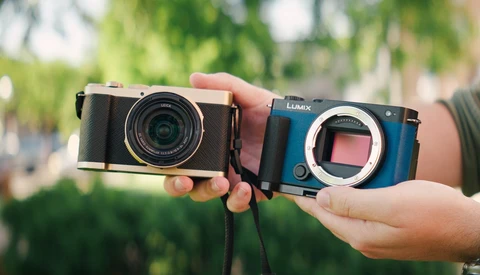
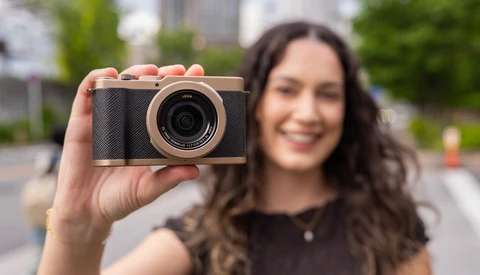
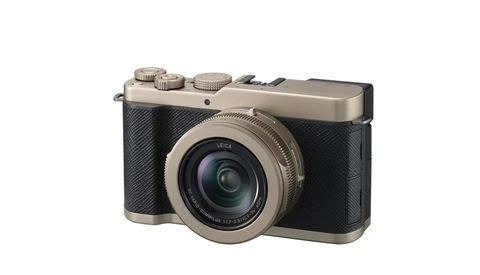
The Lumix L10 is a compact camera built around a 26 MP Micro Four Thirds sensor, a fixed Leica-branded zoom lens, and a spec sheet that will make you question whether Panasonic even knows how to make a simple camera. At $1,500, it sits in a crowded space occupied by cameras like the Fujifilm X100VI, and the question worth asking is whether it can hold its own.

Thypoch 24-50mm f/2.8: Half the Price of Sony's Version, But Is the Image Quality There?

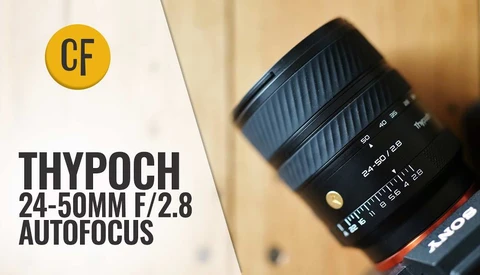
Thypoch built its reputation on manual focus prime lenses, so when the company announced an autofocus zoom, nobody saw it coming. The Thypoch 24-50mm f/2.8 is not only the brand's first zoom lens, it's the first autofocus zoom lens to come out of China entirely, and it lands at $619 on Sony E-mount, undercutting the Sony 24-50mm f/2.8 G by roughly half.

There Might Just Be a Disconnect Between Camera Manufacturers and Market Demands

As with every fast-paced, tech-driven industry, the cycle time for each incremental update in photography equipment seems to get shorter and shorter. Though it has become better for the past few years, each product launch is still not given sufficient time to mature before the next iteration is shoved down our throats. While this might contribute to a better-looking balance sheet from a business standpoint, in the long run, it might lead to a massive disconnect between what camera manufacturers are building and what the market actually demands.
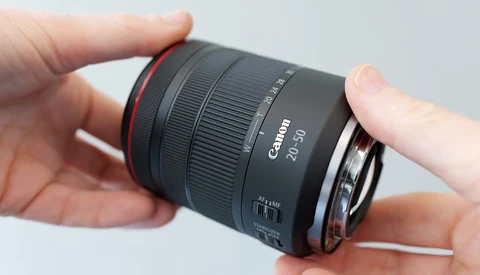
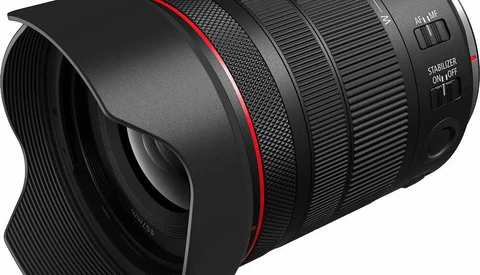
Canon Announces the RF 20-50mm f/4 L IS USM PZ, a Power Zoom for the EOS R6 V Era

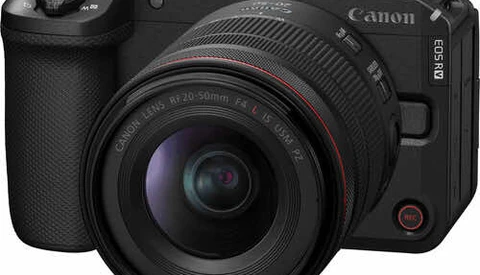
Alongside the EOS R6 V camera body, Canon today announced the RF 20-50mm f/4 L IS USM PZ, the first L-series lens from Canon to include built-in power zoom without requiring an external accessory. The lens is aimed at video shooters and hybrid creators working on gimbals, sliders, and handheld setups, and serves as the native companion to the video-focused EOS R6 V.

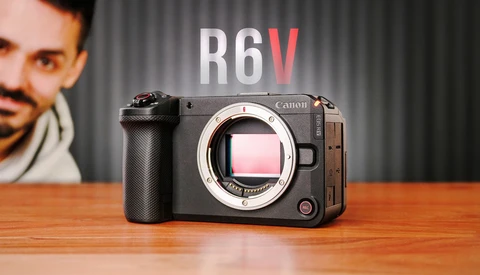
Canon Unveils the EOS R6 V: A 7K Full Frame Video Camera at $2,499

Canon today announced the EOS R6 V, a new full frame mirrorless camera built around video capture, alongside the RF 20-50mm f/4 L IS USM PZ lens and a set of accessories aimed at solo creators and small productions. The R6 V is the first V-series body to use a 32.5-megapixel full frame sensor, and it slots into Canon's lineup as a video-first counterpart to the still-focused R6 Mark III.

Leica M11-D Review: What Shooting With No Screen Actually Does to Your Photography

The Leica M11-D is a digital camera with no rear screen, and that single omission is either its greatest flaw or its greatest feature depending on how honest you are with yourself about how you actually shoot. If you've ever told yourself you'd stop chimping and never followed through, this camera calls that bluff immediately.

Panasonic Jumps Into the Compact Camera Game With the LUMIX L10

Panasonic has announced the LUMIX L10, a new fixed-lens compact camera built around a Four Thirds sensor and a Leica-branded zoom. The release marks the 25th anniversary of the LUMIX line, and Panasonic is launching the camera in three finishes: Black, Silver, and a limited Titanium Gold Special Edition.

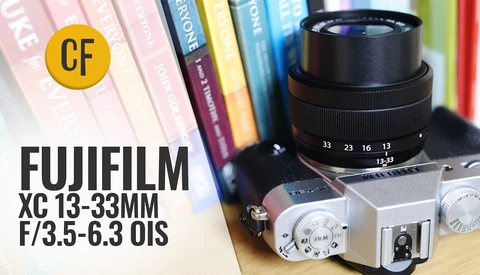
The Fujifilm XC 13-33mm Kit Lens Is Cheap, Wide, and Surprisingly Capable on Some Cameras

The Fujifilm XC 13-33mm f/3.5-6.3 OIS is the one of the newest kit lens options for the Fujifilm's X-mount system, and it takes a different approach than most. Instead of the typical 15-45mm range, this lens goes wider, giving you a full frame equivalent of 20mm to 50mm, which opens up genuinely different shooting possibilities for landscapes, interiors, selfies, and vlogging.

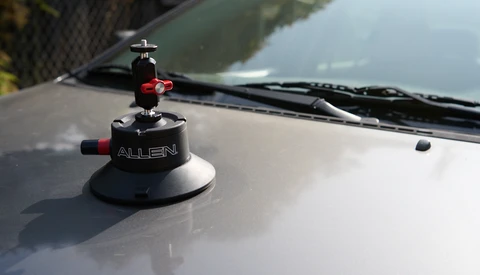
Testing The Allen Smart Suction Snap Camera Mount

Today, I'll have a quick look at the new Allen Smart Suction Snap Camera Mount. It's a tool designed for mounting compact mirrorless cameras, action cams, and smaller DSLRs to smooth surfaces via a suction cup that can deliver dynamic moving shots.

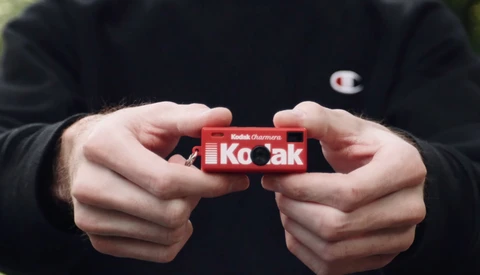
Ranking the Viral Cameras of 2026

From Kodak's Charmera to the strange-but-interesting screenless Escura InstantSnap digital camera, 2026 is shaping up to be the year for some wild, hot takes on what makes a camera these days.

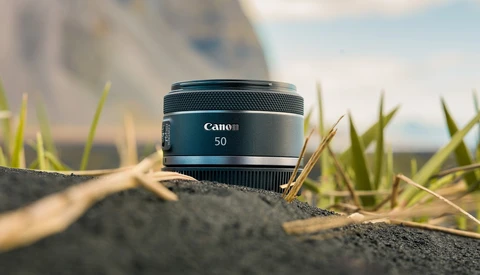
Why a 50mm Prime Might Be the Best Travel Lens You're Ignoring

Choosing a single prime lens for travel forces a real trade-off, and most people default to a 35mm or a wide angle out of habit. The 50mm prime makes a compelling case that it deserves that spot instead, especially if you care about how a location actually feels in a photo rather than just how much of it you can fit in the frame.

OM System Survived Its Split From Olympus: Who Expected This?

When Olympus sold its imaging division to Japan Industrial Partners on January 1, 2021, the new company was called OM Digital Solutions. The OM SYSTEM product brand arrived later, announced in October 2021 as the name the company would put on its cameras going forward. Most of the photography press wrote the obituary in advance of either event. The division had been unprofitable for years. Olympus itself, after more than eighty years of making cameras, was exiting the business. Micro Four Thirds had lost the sensor-size argument in the public imagination to APS-C and full frame. The buyer was a private equity firm, not a camera manufacturer. The standard expectation was managed decline: a few years of catalog padding, a thinning lens roadmap, and eventual fade.

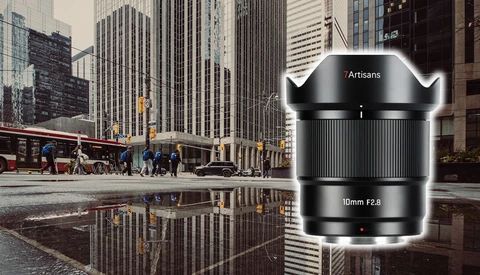
An Impressive Ultra-Wide Lens For APS-C: 7Artisans AF 10mm F2.8 Z

APS-C cameras are quickly becoming the main choice for everyday photography. I've owned a Nikon Z50 for seven years now, and it's still my favorite everyday camera, especially for travel, street, and urban photography. But finding lenses for it has always been a problem.

Why Your Most Personal Photos Shouldn't Come From Your Main Camera

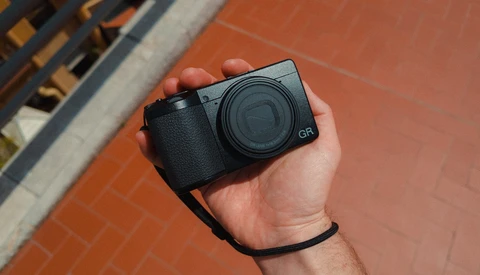
Choosing a dedicated snapshot camera changes how you shoot, and the Ricoh GR IV is one of the more interesting options for that role right now. This video makes a compelling case that serious shooters are missing something by always being in "photography mode," and that having a second camera specifically for personal snapshots can fill a gap that even a smartphone can't.

Full Frame vs. APS-C in 2026: The Case for Going Smaller

The idea that full frame is the "serious photographer's" destination has shaped how people spend money on gear for decades. In 2026, that assumption deserves a hard look, because the lens market, sensor technology, and real-world shooting habits have all shifted in ways that change the math.

Why Fujifilm Is the Only Major Manufacturer That Understands Gen Z

The Fujifilm X100VI has been supply-constrained for more than two years. The camera launched in February 2024, and as of April 2026, availability remains spotty: Fujifilm's own US shop typically shows it as "Notify Me" rather than in stock, and major retailers list the camera as temporarily out of stock with rolling expected availability windows rather than steady inventory. The company raised the US price from $1,599 to $1,799, and the camera still moves for above MSRP on the secondary market. Two years of reported shortages is not a production problem that got solved. It is a demand problem that Fujifilm is openly uninterested in solving.

The Best Camera for Fujifilm X100VI Fans Who Want Interchangeable Lenses

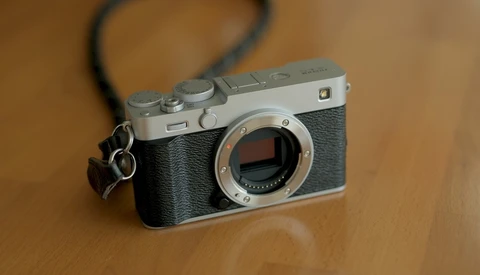
The Fujifilm X-E5 sits in an interesting spot in the Fujifilm lineup: it has the same 40-megapixel sensor as the Fujifilm X-T5 but in a body closer in size to the X100 series, with interchangeable lenses. After a year of daily use, including replacing the X-T5 as his main body, Mitch Lally has a clear picture of exactly who this camera is for and where it falls short.

The Cheapest Way to Shoot Digital Leica M-Mount in 2026

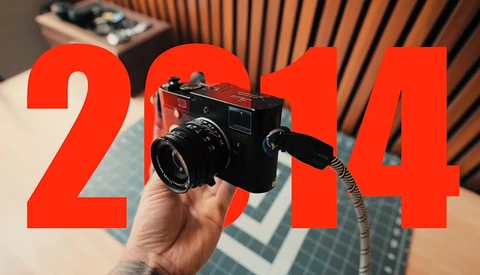
Leica and affordable rarely share the same conversation, but the Leica M240 might be the exception worth paying attention to. It's a full frame, M-mount digital rangefinder that costs a fraction of what modern Leica bodies go for, and it still delivers the core experience that makes these cameras worth owning.

Don't Miss These Amazing Photography and Video Deals at B&H Photo Right Now

B&H Photo is running some aggressive discounts across cameras, lighting, support, storage, and accessories this week. We dug through hundreds of active DealZone listings, sale prices, and lowest-in-180-day markdowns to find 30 that are worth your attention, sorted by a combination of percentage off and absolute dollar savings. These deals are time-limited, most running through the next seven days, so act quickly on anything that catches your eye. Whether you are building out a studio, restocking expendables, or hunting for a serious gear upgrade, there is something here for you.

The Return of Camera Design as Identity

Somewhere around 2010, camera design stopped mattering to the photography industry. The DSLR era had produced bodies defined by ergonomics rather than aesthetics, and the first mirrorless wave carried forward the same logic. Cameras were tools, tools looked like tools, and any photographer who cared about how a camera looked was suspected of being a poseur. The mainstream press reinforced the assumption. Reviewers evaluated bodies by their grip comfort, control layouts, button feel, and weather sealing, and any discussion of aesthetics was treated as either irrelevant or faintly embarrassing.

HUANUO FlowLift Monitor Arm and VESA Mount Review: An Inexpensive Upgrade That Actually Works

Want to reclaim your desk space and maybe even reduce the pain in your neck by optimizing your viewing angle? Consider a monitor arm. Here, we take a look at the HUANUO FlowLift™ Single Monitor Mount (formerly SS6, but still model HNSS6). I also discuss the HUANUO Universal VESA Mount Adapter Kit (Model HNMUA4), which was needed for my particular monitor. How well did they work? How easy were they to install?

The Real Advantage of Micro Four Thirds Nobody Talks About Enough

Choosing a camera system means committing to an ecosystem, and for most systems, that means locking yourself into one manufacturer's lenses. Micro Four Thirds breaks that rule in a way that has real, practical consequences for what you can carry and shoot.

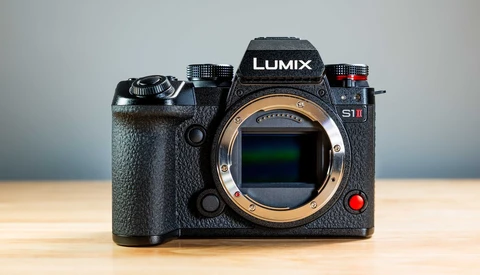
Lumix S1 II Review: Incredible Dynamic Range, But There's a Catch

The Lumix S1 II sits at $3,200 list price, currently discounted to around $2,900, and it's trying to compete with video-focused cameras from Canon, Sony, and Nikon on both features and value. Whether it actually pulls that off depends heavily on a few specific trade-offs that aren't obvious from the spec sheet.

5 Things That Are Worth Splurging On in Photography (and 5 That Are Not)

Photography has a spending problem, and it starts early. The moment you get serious enough to move past the kit lens and the auto mode, the industry opens a firehose of recommendations pointed directly at your wallet. Better bodies, faster glass, studio lighting, editing software, bags, straps, filters, presets, printers, and accessories that promise to make your work look professional before you have figured out what "professional" means for you.

The Viltrox 35mm f/1.2 Lab N Fixed What Was Already a Near-Perfect Lens

Viltrox's 35mm f/1.2 Lab was already one of the sharpest, most capable lenses in its class when it launched. The new "N" version strips out the OLED screen and replaces the unconventional control ring with a traditional aperture ring, and that single change makes a lens that was optically exceptional finally handle the way it should.

Why the 85mm f/1.8 Beats the 85mm f/1.4 for 95% of Photographers

The 85mm prime is the rare lens that almost every working portrait photographer owns, eventually. It is the focal length that does the most flattering work on faces, the easiest one to recommend to a portrait beginner, and the lens most photographers reach for when they want to make a person look the way they want to be seen.

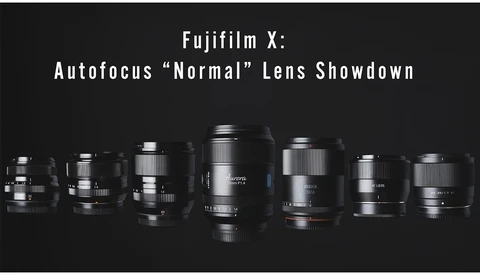
The Best 35mm Lens for Fujifilm X Isn't What You'd Expect

Choosing a normal-length prime for your Fujifilm X system sounds straightforward until you realize there are seven legitimate autofocus options sitting in roughly the same focal length range, each with a different price, build, and rendering character. The gap between the best and worst of them is smaller than you'd expect, but the differences in autofocus reliability and real-world usability are anything but trivial.

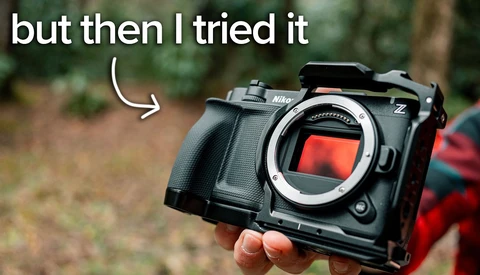
Why a Career Canon Shooter Is Switching to the Nikon ZR

The Nikon ZR is a camera that has generated a lot of conversation since Nikon acquired Red Cinema, but most of that conversation focuses on specs and codec comparisons. What's harder to find is a perspective from someone who actually shot on a Red camera for years, sold it, moved on, and then picked up the ZR expecting to be underwhelmed.

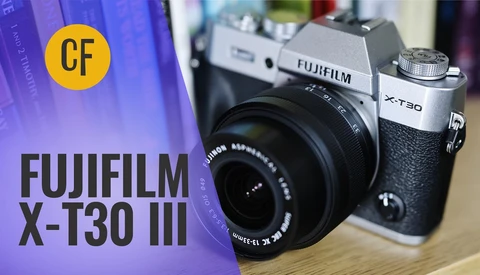
Fujifilm X-T30 III Review: 6.2K Video in a $1,000 Camera Is Hard to Ignore

The Fujifilm X-T30 III sits at $1,000 body only, positioning it as one of Fujifilm's most accessible entry points into the X-series system. For that price, you're getting a 26-megapixel APS-C camera with some video specs that don't match what you'd expect from a camera in this range.