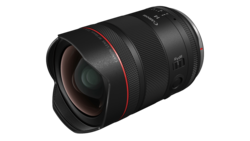
The Canon RF 14mm f/1.4L VCM is one of those lenses that looks extreme before you even mount it. An ultra-wide 14mm with an f/1.4 aperture in a surprisingly compact body changes how you think about low-light shooting and video setups.
Coming to you from Anthony Gugliotta, this detailed video takes a close look at the Canon RF 14mm f/1.4L VCM and why it stands apart. At first glance, 14mm is not new. Neither is f/1.4. Put them together in a native RF mount lens this small and things get interesting. Gugliotta compares it to a typical 15-35mm zoom and shows how the extra millimeter changes framing in tighter spaces. You see more of the room, more background, more environment, which affects how you tell a story on camera.
He walks through real-world use rather than charts. A talking-head setup at 14mm feels immersive and slightly dramatic. Open the lens to f/1.4 during blue hour and the scene shifts again. Instead of blasting a key light at full power, he drops it to nearly nothing and lets the aperture carry the exposure. The look becomes moodier, with shallow depth that feels unusual for such a wide focal length. You start thinking about what that means for events, receptions, or any dim interior where ISO 12,800 has been the norm.
Astrophotography is the obvious use. At f/1.4, you gather four times as much light as f/2.8. That can turn a 20-second exposure into 5 seconds, depending on your tolerance for noise and star movement. Shorter exposures mean cleaner files and less star trailing.
There are tradeoffs. Canon’s VCM lenses rely heavily on in-camera profile corrections. Peripheral illumination, distortion correction, and focus breathing compensation all play a role. Turn those corrections off and the raw frame shows strong vignetting and visible distortion. The corners look darker and stretched before software steps in. With corrections on, the image snaps back into a usable frame, but that comes with a crop and some digital cleanup. Gugliotta demonstrates the difference in both video and stills, including how the frame subtly shifts when focus breathing compensation is disabled.
Sharpness in the center looks strong, even on a high-resolution body. In the corners, he notices more color noise when pushing shadows, particularly with corrections applied. It is not a disaster, but it is there if you zoom to 100%. If your main subject stays centered, the performance is far more reassuring.
Size might be the most practical feature. Compared to something like a Sigma 14mm f/1.4, which is significantly larger and heavier, this lens feels like something you can leave in a bag without second thought. That changes how often you actually carry a specialty lens. It is still an expensive piece of glass, and Gugliotta openly questions whether an f/1.8 version at a lower price would make more sense for many shooters. Check out the video above for the full rundown from Gugliotta.

No comments yet