
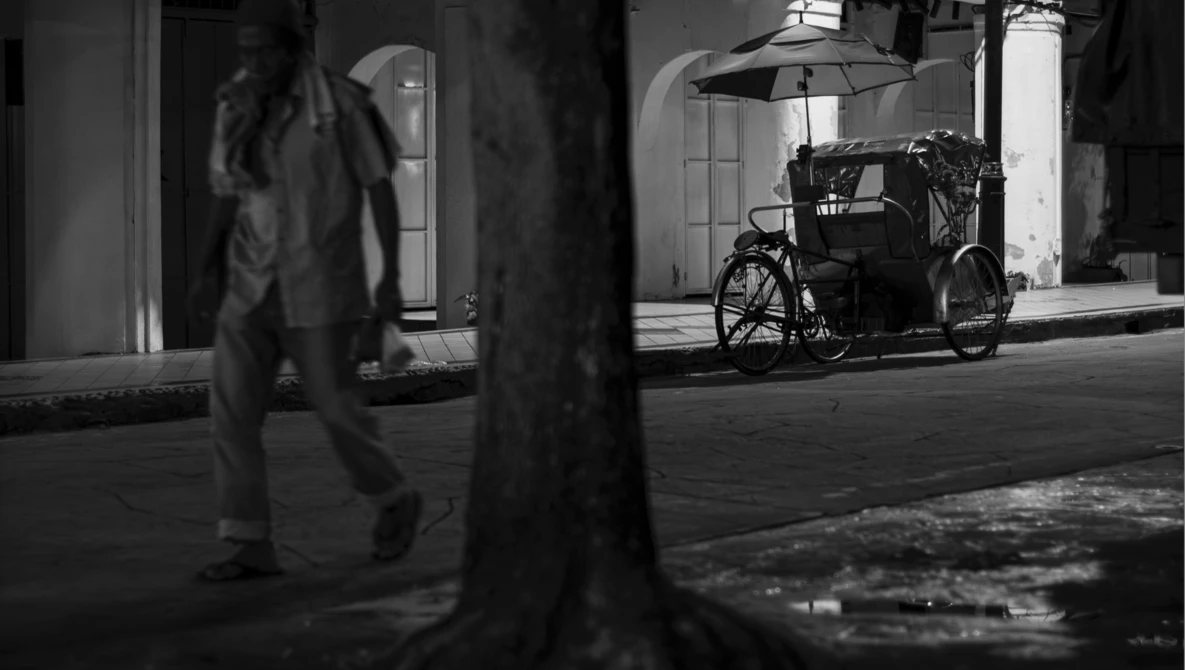
Compromises, as I would describe them, are simply the consequences of decision-making. And it is something we don't talk about enough, especially in the photography industry. As much as we like to paint a beautiful picture of our creative journey, the truth is that we can't have everything laid out perfectly without accepting compromises, unless we are living somewhere over the rainbow or have unlimited skills, time, and resources. Practically speaking, neither makes much sense.
Interestingly, at least from my observation, when it comes to photography and videography, many people seem to want everything, all at once, often without questioning the logic of having it. As if having all the good stuff bound together will somehow miraculously improve their work. Or perhaps they don't even realize the compromises exist in the first place. Allow me to explain. Compromises are everywhere, even in areas we rarely question. Higher resolution brings heavier workflows. Greater flexibility invites indecision. More headroom asks for more tolerance. None of this is inherently bad — it's simply the reality behind every decision we make. But when we refuse to acknowledge those compromises, we mistake the capabilities of our tools for progress, rather than the work itself.
This article is not about blaming gear, technology, or even the people who buy them. It's about acknowledging that every creative decision we make naturally comes with a trade-off. The more things we ask for, the more things we have to pay back. That "payment" might come in the form of money, complexity, time, weight, reliability, or even the way we think and shoot. And throwing more money and more technology at a problem is rarely the right answer.
At its core, a compromise is when you are forced to accept limitations or find a workaround. What's interesting is that most people don't notice compromises because they rarely ask whether their tools are operating within or beyond the design specifications. Modern cameras are incredible pieces of machinery, but some of them are also so powerful that unless you are willing to invest money and time to stay on top of things constantly, that edge starts to wear thin after a while. And even then, you may not actually get better results than with much more mid-range and mainstream equipment, when taking your executional capabilities into consideration.
Take a hypothetical but very realistic comparison. The latest Canon EOS R6 Mark III, which is no doubt an excellent camera, is capable of recording up to 7K 12-bit raw video and open-gate 7K video internally. On paper, that sounds incredible. But at that level, you are easily looking at data rates north of 1.5–2 Gbps. In practical terms, that means roughly above 900 GB per hour of footage, assuming no external compression is applied. A single shoot can quietly eat through multiple terabytes of storage, demand the fastest cards available, and require a fairly serious computer just to play the files smoothly on a timeline. Even then, that is coming from a camera body that is very well made; if it's slightly inferior, you end up dealing with some serious overheating and other operational compromises. Now compare that to its predecessor, the Canon EOS R6 Mark II, released three years ago, which records oversampled 4K 10-bit video internally at bitrates typically around 120–340 Mbps, translating roughly into tens of gigabytes per hour — files that are easier to manage, faster to offload, less punishing on storage, and far more forgiving in post-production — while still delivering image quality that exceeds what most platforms, clients, and viewers will ever see.
And this is where the compromise reveals itself. Do you actually need a 7K open-gate file most of the time? Chances are you might eventually give up using it — not because the image isn't good, but because you're constantly battling storage limits, processing power, and workflow friction. On the other hand, using the slightly older R6 Mark II, which already offers 90% of what you will ever need — ease of use, strong performance, affordability, and reliability — minus all the added stress. The same applies to medium-format photography. You gain image quality and rendering, but you accept slower operation and fewer lens choices, simply because it is a niche and specialized tool. The point isn't that higher headroom is bad; it's that while it's nice to have, the benefits diminish rapidly, and the compromises may eventually outweigh it. Personally, a tool's capability only becomes meaningful when it aligns with the way you shoot, think, and deliver. In other words, how often do you actually use that headroom? Otherwise, it's just unused potential, carrying very real consequences when the cost of maintaining it gets in the way of the work itself.

This brings me to another question I often find myself asking: Is the availability of choice spoiling creativity and skill development? Let's run a simple thought experiment. Based on the Canon example above, given that both are excellent cameras and if money weren't an object, which would you buy? If you are thinking it's most definitely going to be the latest and greatest, then the obvious follow-up question is: why not get something more practical, with less hassle? I think the answer is simple: given that money isn't an issue, you would want the best that you can get and would not settle for anything less. The reality is you will probably be annoyed most of the time, having dealt with too many things that hinder the creative process to a point that it actually wears you out eventually. Sadly, it is also ultimately because money is indeed a finite resource, and you should plan carefully on what you are getting.
Now, before some of you go into debate, stating one is clearly better than the other, let me clarify my point of view. Personally, both of them are without question fantastic and highly capable pieces of equipment, but both also have their own sets of compromises that you have to weigh. And to me, in the end, it's much easier when we only have one option, or nothing at all — then the decision is easy. That way, we will learn to live with the shortcomings and make it work for us. It's only when we have two very similar choices that things become difficult — clearly a first-world problem.
I think the choice paralysis situation is made worse if you have an obsessive personality like mine that cares a lot about the end result. Because speaking from experience, you will most likely spend all your time analyzing which is better instead of creating. The issue here is that the diminishing returns are incredibly steep; given that most files these days are viewed on the web, the difference between 7K or 4K oversampled and regular 4K footage output is harder to see. But once you see the difference, it starts to bother you. And as a creator, I think we have the tendency to focus on the limitations and use them as an excuse for why an image isn't as good as it should be, putting all the blame on our gear. But if we only had a camera that records regular 4K footage and didn't know anything better, I am fairly certain most of us would find a way to make it work beautifully and creatively.ost of us would find a way to make it work beautifully creatively.

As guilty as it is to say, having an abundance of choices has quietly turned many of us into whiners. At least for me, I have to consciously stop myself from buying yet another piece of equipment, thinking it might result in a different output, while having a bunch of gear underutilized. Instead, constant experimentation and pushing the output would have resulted in better work. If anything, working with limitations might actually be easier for us as creatives, since we will be working towards a single direction, thinking about removing impracticalities and overcoming them, instead of being presented with a bunch of probable possibilities that might not end up bearing fruit. Perhaps this is why I get more enjoyable shots when shooting with an 8-year-old Leica CL and a prime lens compared to the newer and better Canon EOS R5 with a 28-70mm zoom lens.
It is clear that when choice becomes abundant, commitment weakens. And without commitment, neither creativity nor skill has much room to grow. I think the core problem here is that we are still obsessing over these choices even when every tool we have at present has passed the point of sufficiency a long time ago. And it is exactly these obsessions that end up snowballing into a set of compromises — be it in terms of computing power, mental space, or money — that eventually begin to interfere with the creative process we care about most.



7 Comments
Compromise works in both directions. I keep working on an older Mac computer and operating system by choice so that I can use Photoshop CS5. I refused the subscription plan from the start, but at some point in time, I'll have to upgrade the computer and find a Photoshop alternative. Technology has to match your needs, and my needs don't require the newest version of Photoshop. I'm sure other photographers can use it to improve their workflow. No one size fits all.
I don't see why creativity though should be restricted just for thinking about your choices. I'm sure you can analyze things to death and still maintain a high level of creativity. Making good decisions is at the heart of every successful business, always at the front or back of mind, nearly every day. I don't think of it as a compromise... I simply ask what I need to get the job done, get it, and go do it. Inevitably upgrades are necessary, otherwise I'd still be trying to fit my files onto a 20 megabyte external hard drive... the one I bought in the 1980s for about $700. My rule of thumb was to only upgrade when I believed it would produce a tangible result in either lowering my cost of business, or enabling me to get new clients. Oh, and I never bought anything, never once, that I couldn't pay off on my next credit card statement. Staying out of debt has saved my business during some rough spells more than once.
Hi Ed, Good to hear from you again, its been a while! I fully agree with your last statement Ed. I too practice this myself, in exception for one thing that I need when I just started out running my own business 7 years ago. Paying everything now with cash is my way to go as I would like to reduce monthly commitments to free up cashflow for difficult times like this.
Putting these aside, the main reason for the article is to highlight to creatives out there that they do not need the latest and greatest all the time because there is no such thing as perfection unless we have unlimited monetary resources. As you have accurately pointed out, if we don't need the latest version of photoshop or the latest computer, then we don't need to upgrade it. And if we can no longer utilize the 20 megabyte hard drive, feel free to get it. I guess the benchmark here will be what we need to get things done and can we pay it off.
Very interesting and applicable introspections here. I agree when there becomes too many choices the habit can be to do nothing. I feel the same way about my lenses selections. I think I made better (and more frequently) photographs that express my intentions when I only have the lens on my camera. This is also why I'm addicted to olde box cameras ha
Thanks for reading! I started my career with one camera one lens, and now I lost count how many I own and bring so many options to site and mostly ending with me using only 1 or 2.. the rest are just redundancy.. I really think we will do better with restrictions, specifically finding ways to overcome things. The process of overcoming things also builds genuine ideas step by step
I agree. It's not that I really mind carrying multiples, especially on critical jobs or projects, but as you say it's something about the adaption and improvisation that comes from limited kit that somehow adds a creative spark.
You put it in words better than I do Adam! Multiples are more for backups and backup of backups lol The more we have the more paranoid we become, probably because our stakes are also higher being able to afford redundancy. I miss living on the edge!