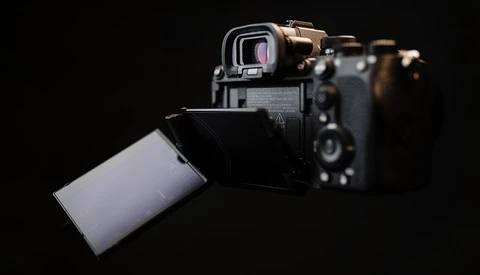
The Sony a7R VI Somehow Beat Sony's Own Flagship
Sony just released a camera that outperforms their own flagship model and costs $2,000 less. That's not a headline you expect to write, but here we are.

Pushing Boundaries: A Different Take on Photographing Sports
Outdoor photographer Rainer Eder has teamed up with Swiss mountain sports brand Mammut to produce Pushing Boundaries, a visually arresting photo series that reimagines what athletic determination looks like when it's taken out of its natural habitat. Instead of pristine alpine settings, elite athletes are placed into unexpected, often industrial environments — spaces that test their physical ability, adaptability, and mindset.
Latest Gear Reviews


Active Contests
3
210
Enter your Best "Dark" or "Low-Key" images
Welcome to the April Critique the Community! For this contest/critique, we are doing another abstract theme that should allow more photographers to enter. For this month we want to see your most "dark" or "low key" photographs.
The Sigma 135mm f/1.4 Art Has No Real Competition, and the Images Prove It
The Sigma 135mm f/1.4 DG HSM Art is one of the most optically ambitious lenses ever made for portrait work, and it exists almost entirely because Sigma wanted to prove it could be done.
Fstoppers Exclusives





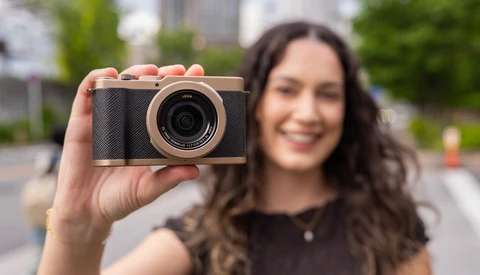
The Lumix L10 Has a Leaf Shutter and a Leica Lens, But How Does It Actually Shoot?
The Lumix L10 is a fixed-lens compact camera with a leaf shutter, a viewfinder, a hot shoe, and a Leica-branded 24–75mm f/1.7–2.8 lens on a Four Thirds sensor. If you're weighing compact cameras for travel or daily carry, the spec sheet here is worth a close look.

Leica M11-D Review: What Shooting With No Screen Actually Does to Your Photography
The Leica M11-D is a digital camera with no rear screen, and that single omission is either its greatest flaw or its greatest feature depending on how honest you are with yourself about how you actually shoot. If you've ever told yourself you'd stop chimping and never followed through, this camera calls that bluff immediately.
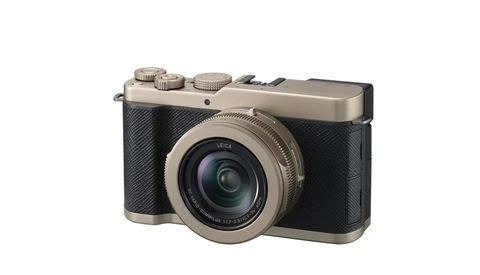
Panasonic Jumps Into the Compact Camera Game With the LUMIX L10
Panasonic has announced the LUMIX L10, a new fixed-lens compact camera built around a Four Thirds sensor and a Leica-branded zoom. The release marks the 25th anniversary of the LUMIX line, and Panasonic is launching the camera in three finishes: Black, Silver, and a limited Titanium Gold Special Edition.

Why Every Photographer Needs to Delete 90% of Their Portfolio
Most working photographers have a portfolio problem. The problem is not that the work is bad. The work is usually fine. The problem is that there is too much of it. Portfolios that should have 12 to 18 images contain 40 or 50 or 80. Websites that should load three galleries fast contain eight galleries that load slowly. Instagram grids intended to function as portfolios contain two years of inconsistent work that blurs the photographer's identity rather than sharpening it. The photographer has spent years building the portfolio and cannot bring themselves to remove anything from it.

What Photographers Can Learn From Hunter S. Thompson
Hunter S. Thompson is certainly one of my references — not because he ever cared about photography, but because he understood something most photographers avoid.

Bad Weather, Better Photos? Street and Urban Photography in the Rain
Most photographers put the camera away when it rains, but I believe this is a huge mistake. I've found that some of my best photos are made when it's raining, and I make the effort to embrace it. Let's talk about why.

Less is More: The Power of Simplicity in Landscape Photography
Discover the art of minimalism in landscape photography and learn how the deliberate removal of distractions can elevate your images. Join me as I share insights from my recent trip to Namibia, highlighting the beauty and purpose behind each frame.
The Camera Holding You Back Might Be the Best One You Own
Buying a new camera feels like the obvious move when you want to level up your skills. But the gear you already own, or something even cheaper, might be doing more for your growth than anything new ever could.
Finding Your Own Photography Style: A 3-Step Process That Actually Works
Most photographers spend years chasing a style without knowing what they're actually looking for. Sean Dalton has spent the last decade building his, and he recently looked back at 10 years of work to map out exactly how it happened and how you can shortcut the process.
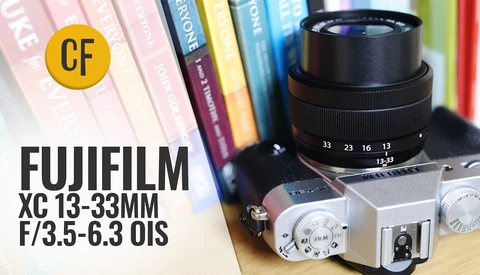
The Fujifilm XC 13-33mm Kit Lens Is Cheap, Wide, and Surprisingly Capable on Some Cameras
The Fujifilm XC 13-33mm f/3.5-6.3 OIS is the one of the newest kit lens options for the Fujifilm's X-mount system, and it takes a different approach than most. Instead of the typical 15-45mm range, this lens goes wider, giving you a full frame equivalent of 20mm to 50mm, which opens up genuinely different shooting possibilities for landscapes, interiors, selfies, and vlogging.
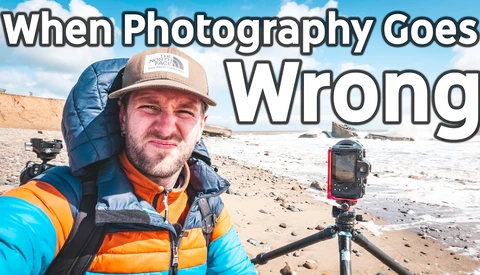
When Plans Fall Apart Mid-Shoot
Shooting in brutal coastal wind is one of the fastest ways to learn what your gear and your plans are actually worth. When conditions fall apart mid-shoot, what you do next says more about your photography than any perfect golden-hour session ever could.
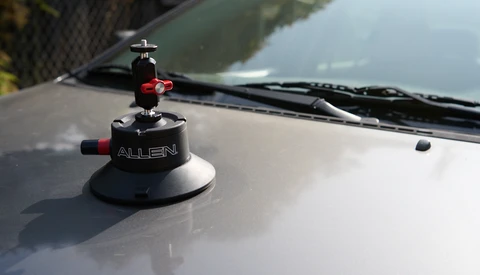
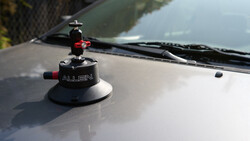
Testing The Allen Smart Suction Snap Camera Mount
Today, I'll have a quick look at the new Allen Smart Suction Snap Camera Mount. It's a tool designed for mounting compact mirrorless cameras, action cams, and smaller DSLRs to smooth surfaces via a suction cup that can deliver dynamic moving shots.
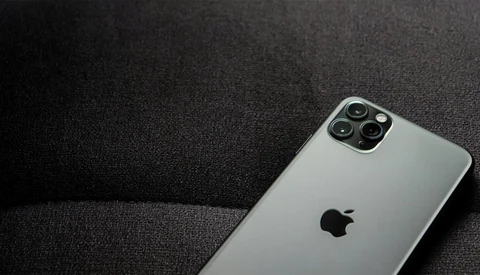
Can Smartphones Replace Your Camera in 2026?
Nearly everyone has a smartphone in today's world. They have come so far, and the technology inside them is extremely impressive. When you think back 20 years ago, they had a small screen and could only be used to make calls. Now, you can use them for pretty much everything: to call people, to listen to music, use them as GPS to get around, and in a lot of cases as a camera.

Why Niching Down Is the Single Most Profitable Decision Many Photographers Never Make
The photography business has a strange relationship with specialization. Almost every working photographer starts as a generalist. The first few years of paid work are a scramble: weddings on weekends, headshots during the week, a real estate gig when a friend asks for a favor, some product work to pay for a lens upgrade, maybe a few corporate events when the calendar is thin. The logic is obvious and reasonable. Early in a career, any paying work is better than no paying work, and saying yes to every request builds both experience and cash flow. That first phase of generalist scrambling is not a mistake. It is how most photographers who become successful actually learn their craft. The mistake is staying there.

Can You Come Home Empty-Handed and Still Call It a Good Shoot?
Landscape photography doesn't always end with a keeper. This video makes that case plainly, and it's one of the more honest looks at what a real shoot actually feels like from start to finish.
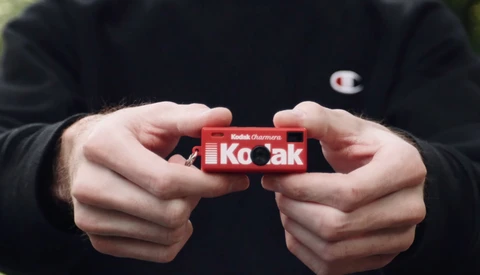
Ranking the Viral Cameras of 2026
From Kodak's Charmera to the strange-but-interesting screenless Escura InstantSnap digital camera, 2026 is shaping up to be the year for some wild, hot takes on what makes a camera these days.
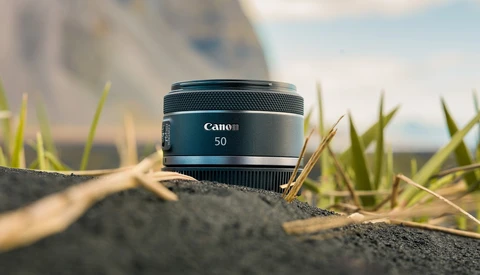
Why a 50mm Prime Might Be the Best Travel Lens You're Ignoring
Choosing a single prime lens for travel forces a real trade-off, and most people default to a 35mm or a wide angle out of habit. The 50mm prime makes a compelling case that it deserves that spot instead, especially if you care about how a location actually feels in a photo rather than just how much of it you can fit in the frame.

Canon 135mm f/2 vs. Laowa 200mm f/2: Which One Actually Destroys Backgrounds Better?
Shooting portraits at f/2 with a 200mm lens produces backgrounds so obliterated they barely look real. If you shoot portraits and background separation is a priority, the focal length and aperture combination you choose will define your entire look.
Starting Photography in 2026? Avoid These 5 Common Mistakes
If you're starting photography in 2026, the path to improvement isn't paved with better gear. Brenda Bergreen has spent years shooting weddings, adventure, landscapes, portraits, and travel, and she's mapped out exactly where beginners waste time and where they actually grow.
OM System Survived Its Split From Olympus: Who Expected This?
When Olympus sold its imaging division to Japan Industrial Partners on January 1, 2021, the new company was called OM Digital Solutions. The OM SYSTEM product brand arrived later, announced in October 2021 as the name the company would put on its cameras going forward. Most of the photography press wrote the obituary in advance of either event. The division had been unprofitable for years. Olympus itself, after more than eighty years of making cameras, was exiting the business. Micro Four Thirds had lost the sensor-size argument in the public imagination to APS-C and full frame. The buyer was a private equity firm, not a camera manufacturer. The standard expectation was managed decline: a few years of catalog padding, a thinning lens roadmap, and eventual fade.
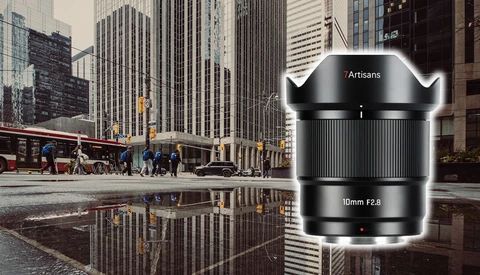
An Impressive Ultra-Wide Lens For APS-C: 7Artisans AF 10mm F2.8 Z
APS-C cameras are quickly becoming the main choice for everyday photography. I've owned a Nikon Z50 for seven years now, and it's still my favorite everyday camera, especially for travel, street, and urban photography. But finding lenses for it has always been a problem.
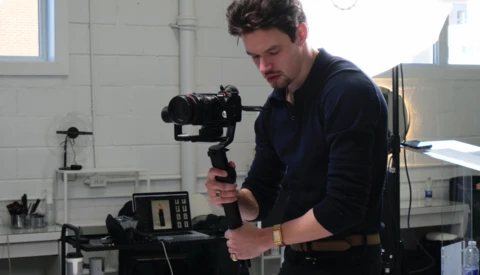
Why I Still Use a Gimbal in 2026
It seems everybody is retiring their gimbals. Every time I look at social media, I hear people talking about: does anybody use a gimbal anymore? Or you'll see videos where people are talking about gear they regret buying, and a gimbal is usually on that list.