
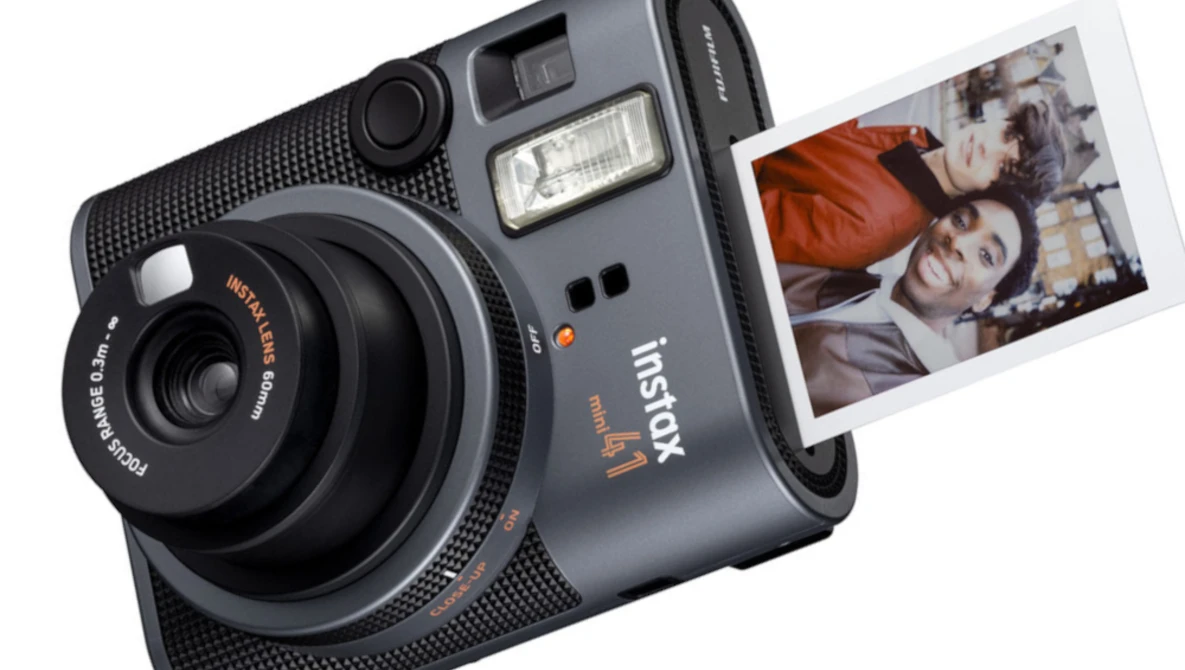
The analog photography revival is real. You can see it at every wedding reception with a disposable camera basket, every college campus where students dangle point-and-shoots from their wrists, every TikTok tutorial on how to load a roll of Kodak Gold. But if you follow the money instead of the aesthetics, you'll find two radically different stories unfolding under the same "film is back" umbrella.
One story involves a company pouring nearly $74 million into expanding production of a film product, with plans to increase capacity by 50 percent in four years. The other involves the only major color negative film manufacturer on Earth warning investors, just six months ago, that it might not survive the next twelve months.
Instant film and traditional 35mm film are not on the same trajectory. They are not even playing the same game. And understanding why tells you everything about where analog photography is actually headed, not where we wish it were headed.
The Instax Money Machine
Let's start with the side of the ledger that most photographers don't pay attention to, because it doesn't involve Portra or Leicas or the romantic alchemy of a darkroom.
Fujifilm's Instax division is not a side project. It is not a nostalgia play. It is a billion-dollar business that accounts for roughly half of Fujifilm's entire imaging division revenue and over 63 percent of the division's operating income. In fiscal year 2023, Instax hit 150 billion yen in sales (over $952 million), reaching Fujifilm's internal target a full year ahead of schedule. Fiscal year 2024 broke that record. Fiscal year 2025 is on track to break it again. Fujifilm's CEO Teiichi Goto said the quiet part out loud back in 2023: Instax is their "new gold mine."
In April 2025, Fujifilm announced it had sold 100 million Instax cameras and printers since the line launched in 1998. That's an average of 3.7 million devices per year, sold in over 100 countries. For context, CIPA reported that the entire global digital camera market shipped about 8.5 million units in 2024. Instax alone is nearly half the volume of every digital camera from every manufacturer combined.
But the real story isn't the milestones. It's the investment pattern. Fujifilm has expanded Instax film production three times in four years:
2022: ¥2 billion (~$13 million) for initial expansion. Complete. 2023: ¥4.5 billion (~$30 million) for a 20 percent capacity increase. Operational in 2025. 2025: ¥5 billion (~$31.8 million) for an additional 10 percent increase. Coming online autumn 2026. Total: ¥11.5 billion (~$73.8 million) for a cumulative 50 percent capacity increase over FY2022 levels.
Three production expansions in four years is not a company reacting to a fad. It is a company scaling for sustained demand. As of Fujifilm's most recent earnings report in early 2026, the company posted record-high revenue, operating income, and net income, with imaging segment revenue up 14.1 percent year-over-year. This is the sixteenth consecutive year of annual dividend increases. Instax isn't just working. It's printing money.
The 35mm Situation
Now the other side. The one we need to talk about honestly, even though it's going to sting.
If you shoot color negative 35mm film today, your hobby effectively depends on one company: Eastman Kodak. Yes, Ilford makes excellent black-and-white stocks, and smaller players like CineStill, Lomography, and Harman's Phoenix line fill certain niches. But for mainstream color negative film (the Portra, the Gold, the ColorPlus that most film photographers shoot), Kodak is it. Fujifilm, the company that once made Pro 400H, Superia, and a dozen other beloved emulsions, has largely exited traditional film manufacturing.

So when Kodak filed its Q2 2025 earnings report last August and included a disclosure that there was "substantial doubt about the Company's ability to continue as a going concern," the film photography world had a collective cardiac event. The company reported a net loss of $26 million, a complete reversal from the $26 million profit it posted in the same quarter a year earlier. Kodak had $500 million in debt maturing within twelve months and only $155 million in cash on hand. The stock plunged over 20 percent.
Kodak did survive. By November 2025, the company's Q3 earnings report confirmed the going-concern conditions had been "fully resolved." The pension reversion plan worked better than expected, bringing in approximately $600 million (up from the original $500 million estimate), reducing term debt to $200 million and resulting in what CFO David Bullwinkle called "our healthiest balance sheet in years." Kodak's stock jumped nearly 47 percent on the news. The company even launched a new direct-to-distributor still film line to give it more control over pricing and supply.
But the fragility that the episode exposed is the point. For several months, the entire color film ecosystem teetered because a single 145-year-old company's pension fund transaction hadn't closed yet. Kodak's CEO acknowledged on the Q3 earnings call that "management spent countless hours with customers, suppliers, and investors around the globe counteracting the false narrative" created by the media coverage. That's time and energy that wasn't going toward making film. Kodak is healthier now than it was six months ago, genuinely so. But the fact remains that the world's color film supply was one failed transaction away from catastrophe. That should give every film photographer pause.
Meanwhile, Fujifilm Walked Away
The irony cuts deep. Fujifilm, the company spending $74 million to expand Instax production, has systematically dismantled its traditional film business over the past several years. The timeline of discontinuations reads like an obituary column:
January 2021: Pro 400H discontinued. One of the most beloved color negative stocks in existence, used by wedding and portrait photographers worldwide, killed because Fujifilm could no longer source the specialized raw materials for its unique four-layer coating. If you're a wedding photographer looking to build your skills in an era of shifting tools, Fstoppers' tutorial How to Become a Professional Commercial Wedding Photographer is a great resource for mastering your craft regardless of medium.
November 2022: Fujifilm issues a public apology for shortages of its remaining 35mm color negative and slide films, citing "shortage of raw materials."
March 2023: Fujifilm Japan suspends domestic orders for all remaining color negative 35mm film and slide film in both 35mm and 120 formats. Fujicolor 100, Superia Premium 400, Velvia 50, Velvia 100, Provia 100F: all paused.
2021: Fujifilm closes four of its five South Carolina manufacturing plants.
And here's the detail that tells you everything: when Fujifilm "brought back" Fujicolor 200 in 2021, it turned out to be rebranded Kodak Gold. Fujifilm wasn't even making its own consumer color film anymore. It was buying it from its competitor and slapping a Fuji label on it.
The same company that can't keep Velvia in stock just invested another $32 million in Instax production lines. That's not a contradiction. It's a company making a very clear, very rational bet about where the economics work.
The Per-Shot Economics Nobody Talks About
Here's the part that will surprise people, because the conventional wisdom has it exactly backward: Instax is cheaper than 35mm when you account for total cost.

Most photographers think of instant film as an expensive novelty because they're comparing the sticker price of a pack of Fujifilm Instax Mini Instant Film to the sticker price of a roll of 35mm. But that comparison ignores the enormous hidden costs that make 35mm photography far more expensive than it appears:
Instax Mini: Film cost per shot runs $0.60 to $1.00. Development is built in (free). Scanning isn't needed. Every shot produces a print. Total cost per finished print: $0.60 to $1.00. Turnaround time: 90 seconds.
35mm color negative: Film cost per shot runs $0.28 to $0.50, which sounds cheaper until you add $10 to $20 per roll for development, $5 to $15 per roll for scanning, and $0.25 to $0.50 per frame if you actually want a print. Total cost per finished print: $0.89 to $1.66. Turnaround time: 3 to 14 days.
One analysis from PentaxForums, which compared total cost per finished print across systems including camera amortization over 1,000 shots, found the Fujifilm Instax Mini Evo came in at $0.79 per print, cheaper than the Pentax 17 half-frame film camera at $1.03, and dramatically cheaper than the Ricoh GR IV at $1.37 per print once you factor in home printing costs.
The "Instax is expensive" reputation is a hangover from the Polaroid era, when each shot ran you north of $2.00. Fujifilm fixed that by making the film affordable enough that people don't agonize over wasting a frame. And with hybrid cameras like the Instax Mini Evo and Instax Wide Evo, which let you preview shots digitally before printing, even the waste problem has largely been solved.
Meanwhile, the cost trajectory for 35mm has been relentlessly upward. Since 2018, average 35mm film prices have risen nearly 70 percent. Between 2019 and early 2022 alone, Kodak Ektar jumped 137 percent and Kodak Gold climbed 144 percent. Silver halide crystal costs (the raw material for film emulsions) rose 14 percent in 2023. Kodak Alaris announced another round of 5 to 8 percent wholesale increases effective January 2025. As of mid-2025, film prices were up another 9 percent, with Fujifilm slide stocks like Velvia and Provia climbing $5 per roll in just five months.
Two independent film brands halted production entirely in 2024, unable to absorb rising costs. The economics of 35mm are moving in exactly the wrong direction for a product that needs to attract new shooters.
This Is a Business Model Story, Not a Nostalgia Story
The fundamental difference between Instax and 35mm isn't chemical or aesthetic. It's structural.
Instax operates on the razor-and-blades model that consumer electronics companies have perfected. Sell cameras at accessible price points (some barely above cost) and lock users into proprietary film formats that generate recurring revenue forever. Instax Mini, Square, and Wide are all different formats. You can't use one in another. Every camera sold creates a customer who will buy film indefinitely. The entry point is low (cameras start under $90), the per-shot cost is palatable, and the product is available at every drugstore and airport gift shop on the planet. No technical knowledge required. No lab needed. You shoot, it prints, you hand someone a physical photo. The social utility is immediate.
Traditional 35mm film operates on what I'd call an artisanal supply chain model. There is no significant new camera manufacturing (the Pentax 17 is the notable, admirable exception). Camera bodies are sourced secondhand. Film revenue depends on a shrinking manufacturing base. Each roll requires $10 to $20 in lab processing, an entire secondary industry with its own fragile economics, aging equipment, and specialized chemistry. Scanning adds another cost layer. Rising per-unit costs discourage casual shooters, which shrinks the addressable market, which further increases per-unit costs. It's a vicious cycle that passion alone can't break.
Fujifilm figured out something Kodak never could: they didn't try to save the old film ecosystem. They built an entirely new one with modern consumer product economics. Instax isn't competing with 35mm. It replaced the thing that 35mm could never be: accessible, instant, and financially sustainable at scale.
What This Tells Us About the Future
I've been covering this space for a long time, and I've watched the tension between the romantic narrative and the financial reality grow wider every year. When CNBC covered Kodak's going-concern disclosure last August, they called me for comment. I described the Gen Z film trend as a "divorce from the hyperrealism of digital photography." I stand by that framing. The desire for tangible, imperfect, physical photographs is real and enduring. But desire doesn't automatically translate into a viable manufacturing ecosystem.
Here is what the data says is likely over the next five years:
Instax will continue to grow. Fujifilm is innovating aggressively: the Evo Cinema with its video features and "decades dial," the Instax Biz app for commercial events, new film formats and accessories. These aren't the moves of a company coasting. With record profits and a sixteenth consecutive year of dividend increases, Fujifilm has every incentive and every resource to keep expanding.
35mm will survive, but as a luxury niche. Kodak resolved its 2025 debt crisis and emerged with a genuinely healthier balance sheet. But the underlying economics haven't changed. Film costs will continue rising. The manufacturing base will remain concentrated. The lab infrastructure will keep consolidating. Film photography will look increasingly like vinyl records: a passionate, dedicated community willingly paying premium prices for a tactile experience that mass-market consumers have moved past. That's not death, but it's not the mainstream revival the community hopes for either. For photographers who want to make the most of their work regardless of medium, our tutorial Photography 101 covers fundamental principles that apply whether you're shooting digital or scanning negatives.
The real risk is a supply shock. Kodak's 2025 scare proved that the system has no redundancy. If Kodak were to experience a genuine operational disruption (not a planned factory shutdown, but an unplanned one), there is no backup manufacturer that can fill the void for color negative film at scale. The small independents are wonderful, but CineStill and Lomography cannot replace Kodak's output. Every roll of Kodak Portra 400 in the world comes from one factory in Rochester, New York. That is an extraordinarily concentrated supply chain for a product that millions of people depend on.
The Irony at the Bottom of the Film Canister
The same company that once manufactured Pro 400H, Velvia, Superia, and Acros (some of the most revered film stocks in the history of photography) is now investing $74 million into making sure you never have to wait more than 90 seconds for a credit-card-sized print of your friend's face at a birthday party.
That's not a betrayal of analog photography. It's a company reading the room with clear eyes. Fujifilm didn't kill 35mm film. Digital photography did that twenty years ago. What Fujifilm did was find the version of analog photography that actually works as a modern consumer product: low barrier to entry, instant gratification, physical output, social utility, and a business model that scales.
Whether you love that reality or hate it probably depends on which side of the darkroom door you're standing on. But the numbers don't care about your feelings. And right now, the numbers are very clear about who's winning.

5 Comments
Yes you are correct Alex, but I don't think that they are the same market. It's still 35mm with good lenses vs instant.
It's still you can't reprint it, it's still you are extremely limited with set ups, you can't push process the instant... In a way it's more of 126 or 110 vs 135 and very much 70's sounding. I mean, most likely very few people ever had their 110 or 126 film ever reproduced on prints past original processing.
Back in the 80's is when 135 made its comeback as standard and also when those less impressive formats died off, something like 15-20+ years pre digital. Polaroid never was a master contender either, it failed in that same group way before making it's comeback.
I think that a lot of people never lived the film days and find it "newstalgic" may be(?). It's something you can feel that you don't have to fight with, that no one can force or influence you to get stuck into a secondary product. The fact that people buy the insta systems shows that technology becomes a constraint. Even cell phones impose yet the images are basically unlimited past the purchase investment. That simplicity is freedom so yes, in 2026 it's actually a rare form of simplicity that is freeing and cuts short any social media attempt at selling you ads.
35mm is different, it's more for people who like to handle things and follow a process that's more complex. It's the full experience, but I don't see them as competitors.
Great article on the economics of it all.
A very interesting and unemotional article, thanks.
One thing I'd say though is that comparing 35mm and Instax by print cost is not really meaningful. I'd bet that almost all 35mm film shooters are using some kind of hybrid approach - where they are not looking for a pack of 36 6x4-inch prints from every roll they shoot like people did in the 90s. More likely they are interested in digital scans, and probably only printing a (very) few selected photos.
One other small point - Cinestill seems to be presented here as a kind of (niche) manufacturer independent of Kodak... I think even Cinestill stock is manufactured by Kodak, right?
I think, insta.mania will be over sooner than al of you believe. because geberation zetters do it just for fun (ie. to impress their friends & buddies) - and the more mainstream, the less the fun with impressing.
analogue film rightly is doomed: it's like scribbling on parchment instead of paper :))... noneheless that you could perfectly simulate the analogue film effects of all film brands digitally (via photoshop or via ai) - it's only for eccentrics
Alex, enjoyed the article, solid facts/numbers and reasoning. Fuji is the smarter one. Curious about your thoughts on Polaroid. Of course, there is no comparison w Fuji in scale or resources, akin to Kodak in terms of a sole location producing the films and much limited in resources even compared to Kodak. Polaroids keeps producing new cameras while they can't keep up with manufacturing films for existing cameras.
Of course, Polaroids are much more expensive (~2-3x) than Instax. Another smart move by Fuji is licensing Lomography to manufacture Instax cameras. Personally, I prefer the aesthetics of Polaroids over Instax and recognize that it is like the vinyl, specialized hobby that I can only enjoy occasionally due to Polaroid film costs and lack of availability, especially, their BW stocks.
With the recent mess of Eastman Kodak now directly distributing films competing against Kodak Alaris without making a public statement - presumably, NDA, legal stuff prohibits them - is annoying to the analog film community.
Thanks for the fine article.