Film photography is expensive, slow, and often inconvenient, yet more people keep picking it up. You’ve likely wondered whether it’s nostalgia, trend chasing, or something digital simply can’t replace.
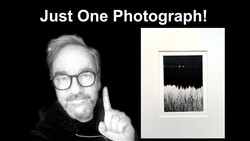
Coming to you from Tim Jamieson, this thoughtful video pushes back on the idea that film is outdated or “silly.” Jamieson references comments both skeptical of today’s analog revival. Their stance makes sense. If you built a career in the darkroom, you might not rush back to chemical trays and contact sheets after experiencing modern mirrorless cameras. Fast autofocus, clean high ISO files, immediate feedback. It’s hard to argue against convenience. Jamieson acknowledges that truth without hesitation, which gives the rest of his argument weight.
He doesn’t pretend film is superior. He shoots it exclusively right now, but he’s clear on the tradeoffs. Film is restrictive. It costs money every time you press the shutter. It’s unreliable compared to digital. You get less flexibility in tricky lighting and no instant review. If you’re on deadlines or juggling client expectations, that friction can feel unnecessary. Yet that same friction becomes the draw. Delayed feedback changes how you think. You meter carefully. You commit. You accept that you won’t know if you nailed it until days later.
That gap between pressing the shutter and seeing the image is central to Jamieson’s point. Digital trains you to react instantly. Film asks you to wait. In a world built on speed and constant screen time, that waiting alters your focus. You slow down. You choose frames with more intention. Jamieson argues that this process has taught him more about exposure than any digital camera ever did. Not because film is magical, but because it removes the safety net. Miss your exposure by a stop and you’ll feel it.
He also talks about the darkroom. Not in a romantic, over-the-top way, but with clear affection. Printing black-and-white images by hand, watching them appear in a tray, adjusting contrast with dodging and burning tools. It’s tactile and imperfect. There’s unpredictability in tone and texture that digital files rarely deliver straight out of camera. You can simulate grain and contrast curves in Lightroom, but that’s not the same as working under a safelight with developer on your fingers.
Still, he makes an important distinction. Film doesn’t make you better. It doesn’t make the photo inherently more valuable. A strong image can come from a phone, a DSLR, or a $10,000 body. Tools don’t define the work. Conviction does. The process has to fit how you see and think. If digital fits your rhythm, use it. If film sparks something, lean into it. The medium should move you toward the kind of images you care about making.
There’s nuance in how Jamieson frames the debate. This isn’t film versus digital. It’s about choosing a process that keeps you engaged. You don’t need permission to try film. You also don’t need to justify staying digital. What you might need, though, is a reminder that inconvenience isn’t always a flaw. Sometimes it sharpens your attention in ways speed never will. Check out the video above for the full rundown from Jamieson.
12 Comments
In the age of AI, I sometimes feel that analog photography might become one of the last truly authentic forms of visual creation. When working with film there is no algorithm correcting your decisions, no instant perfection, and no endless manipulation. What you get is simply the result of your preparation, your eye, and your execution in that moment.
For me it’s similar to music. You can buy a very sophisticated synthesizer with thousands of sounds and perfect digital control, but many musicians still choose a real piano. Not because it is easier or more efficient, but because the experience, the imperfections, and the physical interaction create something human and alive.
Film photography feels very similar. It demands patience, attention, and commitment to each frame.
I often wonder whether analog photography might be one of the few creative spaces where AI cannot truly replace the process itself. AI can simulate the look, but not the experience or the intention behind it.
Or maybe I’m wrong — maybe AI will eventually imitate even that.
I’d be curious to hear what others think about this.
I agree with everything you say. Is film photography worth it in 2026? I think it is.
But will film photography still be worth it in 2036 or 2046? Many film cameras now are already half a century old and getting older by the day. How many of them will still be working in 20 years from now? Will it still be possible to repair them? I can see how we could eventually reach a point where working film cameras are so scarce that only the very wealthiest could afford one; unless, someone decides to start making and selling new ones at a reasonable price.
You just need one manufacturer to reactivate, look into their archive and figure out if the investment is worth it to re-create the tools once used and lost. It's all mechanical, it's possible any time in the future. Even the build in light meter shouldn't be that hard to duplicate. Possibly a small private group could do that.
Why do you think that a camera that has lasted 50 years will all of a sudden break now? Why wouldn't a 1980s mechanical SLR last as long as a 1930s folder? Cameras that rely on electronics and microprocessors are going to be hard to repair, but an old mechanical camera is an easier job.
How many cars built in the 1970s do you see still running? I don’t even see many 1990s cars on the roads these days. Nothing lasts forever. Even an FM2 has a limit to how many photos it can take before the shutter mechanism fails.
I see your point but cars fit more the consumables category than cameras. For the most part they get used daily, get serviced and passed on. But as many cycles a car can go through, each has a very active market. So cars have a short life span unless they are barely ever used and even then, if registered, insured, they actually cost a lot to keep with small yearly mileage. Cameras for the most part never reach their click cycle. But they get shelved a lot, so there are plenty of good ones somewhere in boxes awaiting for someone to pass away or a home cleaning to change hands.
Cars and cameras are not comparable. The wear and tear on a car is orders of magnitude greater. I don't doubt that cameras will need servicing, but I don't think it's hard to imagine that plenty of mechanical cameras will still be in working order in 10, 20, 30 years.
Maybe this is all moot. Who knows what will happen to film photography - maybe it will become as rare as glass plate photography. It would be cool if Nikon or Canon or someone just decided to put some 90s-era autofocus SLRs back into production - but it's hardly economically viable.
I don't think that film photography is inherently more "authentic". There are "algorithms" involved in film photography too - for example, the "white balance" is baked into the film. Shoot tungsten-balanced film in daylight and you will see the result of this algorithm, and it doesn't make the photos any more authentic because of it. Lots of film photographers also follow a hybrid model where they shoot on film, but then scan the images, and quite often adjust them digitally too - not only rotation or cropping, but changing levels/curves, shadows, highlights, etc - even conversion from colour to black and white.
Film to me is about practical knowledge of the process before hand. While digital is not laziness, but the pre-concept of the process isn’t in the intent at first for most people. That’s why people don’t even care that phones have become AI dependent at a level that is not reversible for example. But in the end digital is the same as film, it’s technical and the control of processing the “latent” RAW image is very much identical. They both have a cloud of complexities that hangs over you, both technical, which makes the thinking process more complex than many realize.
What I am trying to say is that film and digital both require quite some technical understanding. It doesn’t mean full practice of every skill but acknowledging that we might be short of something technically alone can improve our qualities as photographer.
Phone cameras are highly automated, over processing what is in reality low, poor quality data. When people finally realize that they are not the ones doing the actual work, it triggers rejection. And by rejecting the process itself people start not being impressed by others work from similar devices. Trust erodes. We are simply not made for that, it’s a natural rejection. The ones who keep going and improving are the ones who understand that there is a process that is acceptable, a path in order to achieve the photographic intent. If it feels natural and pleasing then it's most likely acceptable because it feels like true legitimate authorship. And I think that’s what the article is about.
This video is just one man’s love letter to film photography. It really doesnt matter whether you shoot film or digital because they each have their strengths and weaknesses. You can certainly ‘slow down and be in the moment’ with digital, it’s just not a forced discipline due to the limitations of film but very much up to the photographer to set the limits themselves
The one thing that the big digital camera companies fail to understand is there are many who do not edit images, yes! How many people not so much photographers even with a digital camera new or old can you even think that only use the Auto selection on the camera, i have seen it over and over. A main reason in todays many digital world with a phone or pad making a noise to alert one to a new message from someone or even being bothered by advertisements that just get through. Most all just want an image of something and do not have time to sit down and edit and image.
Film gets that image but also a print small or big to some ones likes, and they can write on the back the who, what, where and how can not do that with a digital image. A digital image has to stand on it's own!!!
Another thing a negative can be digitized and put on a HD or SD also.
I have a nephew who makes 6 figures and uses his Fujifilm Camera in auto linked to his iPad to send images to one and all on a shared link, he travels a lot to the far corners of everywhere and uses a couple of lenses and the small camera. I also know another in the same way who uses the small Sony camera able to be in a pocket who also just shoots in auto and sends images back to his computer of his travels also and shares from there and does his own prints and puts info on the backs.
Not everyone wants to edit images for hours at a time. The photo album is still alive and not on a HD but on someone's lap showing and telling.
I still use my Canon Ftb with all those fast glass lenses with the old prism filters kinda fun also, and yes the prism filters are available still.
One thing about my Canon Ftb is it's light meter inside and linked to a needle for a aperture needle with a circle to be placed over it. like auto mode every capture comes out. I even got another at a estate sale FREE with more lenses just showing interest and showing how it can be used and found a roll of film had it developed and took back to the owners children now old giving some lost memories! It is what we do!!!
There are actually no differences between film and digital. The only thing that has shifted is the processing, but both require processing a latent image no matter if you shoot jpg, Raw or film. The responsibility has shifted from lab to the photographer, that's the only difference. Camera manufacturers were for the most part not in the business of processing a latent image, but provide the tools to create those latent images. Having a third party process the images has been available since the first digital camera, in one form or another. The problem is more educational than true availability.
When the first digital cameras, SLRs and digital backs, came out, there were no structures and technically very little technology as far as image format, transfer, even apps (softwares). Pretty much you couldn't print RGB images at nearly all photo labs until the first generation of Fuji Frontier printers that used actual photographic paper. And that was not even with the first model, but the 350 and 370 that came out later but in high volume, mostly used by minilabs. That and the Zip drive 100 (100mp) that facilitated file transfer somewhat. But printer companies like epson made printing available at home, not in RGB but CMYK and took the market. That's what made people skip the labs at first. But without the proper knowledge and realizing that printing at home was pretty much a financial extortion, the masses stopped generating prints pretty much entirely. It became a thing to preview on your computer, exchange in emails or for social media.
The fact that the various technologies involved could not grow together linearly and that home printer companies went extreme with their greed didn't help and left the general public poorly informed and educated. That's what killed printing for the most part.